Why CBD Hits Different for Everyone — The Science of How Your Body Actually Processes It
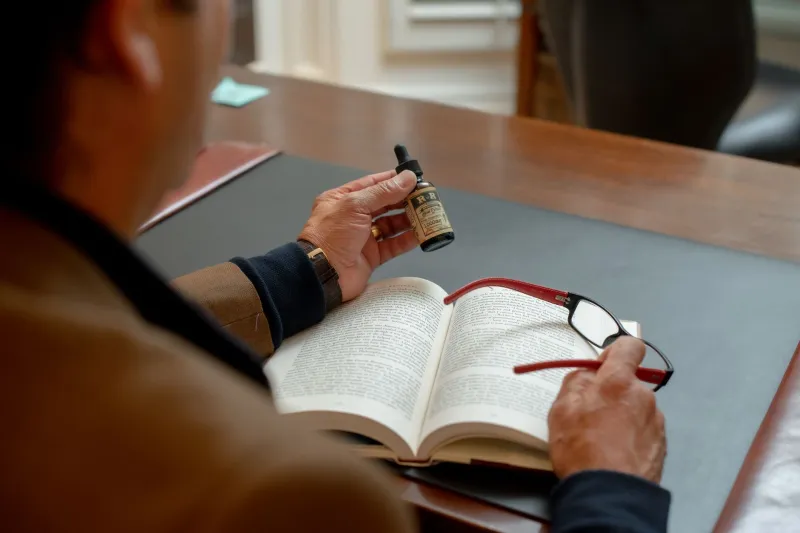
You've probably been there. A friend raves about a CBD tincture that's "completely changed" their evenings. You grab the same bottle, try the same dose, and... nothing. Or worse, you feel groggy and foggy when they felt calm and sharp. Same product. Same milligrams. Completely different experience.
This isn't a placebo problem or a bad batch. It's biology — and once you understand what's actually happening inside your body when you take CBD, the whole picture starts to make a lot more sense.
Your Liver Is Running the Show
Here's something that doesn't make it onto many product labels: CBD is primarily metabolized by a family of liver enzymes called cytochrome P450 enzymes, specifically CYP3A4 and CYP2C19. These enzymes are essentially your body's chemical processing plant. They break down not just CBD, but also a huge portion of common medications — everything from blood thinners to antidepressants to certain allergy pills.
The catch? People vary enormously in how active these enzymes are. Genetics play a massive role here. Some people are what researchers call "rapid metabolizers" — their enzymes chew through CBD quickly, meaning the compound spends less time in their system and the effects are shorter-lived. Others are "poor metabolizers," and CBD lingers longer, sometimes producing stronger or prolonged effects from the exact same dose.
So when your friend says 20mg is their sweet spot, their liver enzymes might be processing CBD at a fundamentally different rate than yours. It's not about willpower or sensitivity in some vague sense — it's biochemistry.
Body Composition Matters More Than You'd Think
CBD is a fat-soluble compound, which means it doesn't dissolve in water — it dissolves in fat. This has a practical consequence that most people overlook: CBD gets stored in fatty tissue.
For people with higher body fat percentages, CBD can accumulate in those fat stores and release gradually over time. This can actually extend the duration of effects, but it can also make consistent dosing trickier since the compound isn't moving through the system in a clean, predictable line. For leaner individuals, CBD tends to process more quickly and exit the body faster.
Body weight also plays a role in determining how much CBD is needed to reach a meaningful concentration in the bloodstream. This is why many practitioners use body weight as one starting variable when helping people find an initial dose range — though it's far from the only factor.
The Medication Interaction You Might Not Know About
This one is genuinely important, especially for anyone taking prescription medications. Because CBD uses those same CYP450 enzymes to metabolize, it can compete with other drugs for processing priority. This can cause one of two things: either CBD gets processed slower than expected (because the enzyme is busy with your medication), or the medication itself gets broken down differently than intended.
Grapefruit is often used as a comparison here — there's even a "grapefruit warning" on many prescriptions for exactly this reason. CBD operates through a similar mechanism. If your medication comes with a grapefruit warning, that's a strong signal to talk to your doctor before adding CBD to your routine.
This isn't meant to scare anyone off — millions of Americans use CBD alongside other wellness routines without issue. But it does underscore why a dose that works perfectly for a healthy 28-year-old with no prescriptions might not be the right starting point for someone managing a chronic condition with multiple medications.
Metabolic Rate and Lifestyle Factors
Your overall metabolic rate — influenced by things like age, activity level, thyroid function, and diet — also affects how quickly CBD moves through your system. A highly active person with a faster metabolism may find that CBD effects wear off sooner than someone more sedentary. This isn't a flaw; it's just physiology.
How you take CBD matters here too. Sublingual oils (held under the tongue) bypass a lot of the digestive process and enter the bloodstream relatively quickly — usually within 15 to 45 minutes. Edibles and capsules have to survive your digestive tract first, which means slower onset and lower overall bioavailability because some CBD gets broken down before it ever reaches your bloodstream. For people with slower digestion, the delay can be even more pronounced.
Even what you've eaten that day can shift the equation. Taking CBD with a high-fat meal has been shown in some studies to significantly increase absorption compared to taking it on an empty stomach.
Endocannabinoid System Differences
At a deeper level, everyone's endocannabinoid system (ECS) — the network of receptors that CBD interacts with — is wired a little differently. Some people have naturally higher concentrations of cannabinoid receptors, while others have fewer. Some produce more of their own endocannabinoids naturally, which may mean external cannabinoids like CBD have less dramatic effects. Stress, sleep, exercise, and diet all influence ECS tone over time.
This is part of why the same person might respond differently to CBD during a high-stress period versus a calm stretch of their life. The system itself is dynamic, not static.
So What Do You Actually Do With This Information?
The honest answer is: start low, go slow, and keep notes. Generic dosing recommendations on product labels are a legal and logistical necessity — they can't possibly account for your enzyme activity, body composition, current medications, or ECS baseline. They're a starting point, not a prescription.
A few practical principles that actually hold up:
- Start with a lower dose than you think you need and give it consistent use for at least a week before adjusting.
- Track how you feel — time of day, what you ate, how your sleep was. Patterns will emerge.
- Be honest about your medications and check in with a healthcare provider if there's any overlap with the CYP450 enzyme list.
- Don't compare your dose to someone else's as a benchmark for whether CBD is "working" for you.
Your biology is genuinely one-of-a-kind. The goal isn't to find the dose that worked for your friend — it's to find the dose that works for you. And that's actually kind of empowering, once you stop expecting a one-size-fits-all answer from a product that was never designed to deliver one.