Green Flags vs. Green Lies: How to Cut Through CBD Marketing Hype and Find Brands Worth Trusting
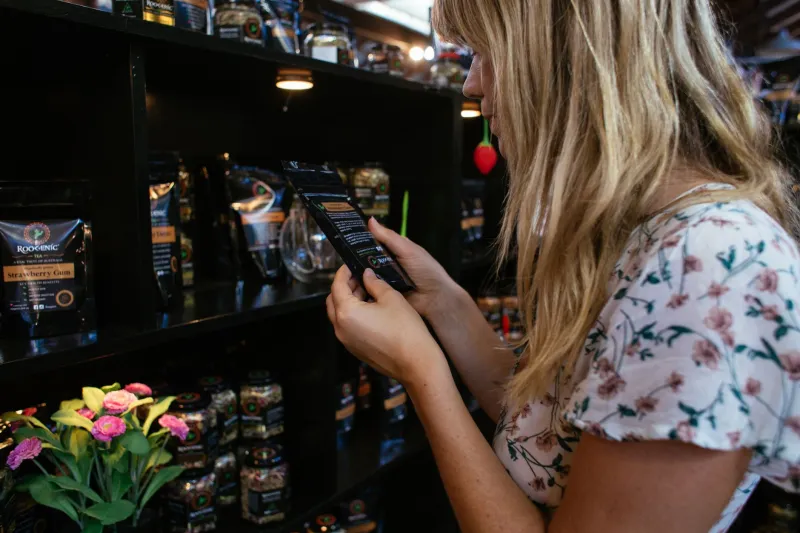
Walk through any health food store or scroll a wellness feed for five minutes and you'll see it everywhere — lush green fields, words like "earth-friendly," "clean," "pure," and "sustainably sourced" plastered across CBD packaging. It looks good. It feels good. But does it mean anything?
Spoiler: sometimes, not much.
Greenwashing — the practice of using vague or misleading environmental and health claims to appear more credible than a brand actually is — has become rampant in the CBD space. And it makes sense why. Consumers are smart, values-driven, and increasingly skeptical of corporate spin. So companies have learned to speak the language of wellness without necessarily doing the work behind it.
The good news? Once you know what to look for, the posers are actually pretty easy to spot.
What Greenwashing Actually Looks Like in the CBD World
Greenwashing isn't always an outright lie. More often, it's a carefully crafted half-truth — or just enough vague language to let your imagination fill in the blanks.
Here are the most common tactics you'll run into:
"Organic" without the receipts. The word organic carries real weight when it's backed by USDA Certified Organic status. But brands can — and do — use it loosely without that certification. If a company calls their hemp "organic" or "grown organically" but you can't find a USDA seal or a third-party verification anywhere on their site, that claim is essentially decoration.
Fake or unverifiable certifications. Some brands display badges that look official but are either self-issued or from organizations that don't actually audit or inspect anything. A real certification has a paper trail. You should be able to search the certifying body independently and verify the brand's status.
"Sustainably sourced" with zero details. Sustainability is a process, not a vibe. If a brand tells you their hemp is sustainably sourced but doesn't explain what that means — regenerative farming practices, water usage, soil health, carbon footprint — it's probably just marketing copy. Genuine sustainable brands tend to geek out on this stuff because they're actually doing it.
Domestic-sounding branding that masks overseas sourcing. American-grown hemp is generally subject to stricter agricultural oversight, which is a legitimate quality signal. But some brands use imagery of rolling American farmland while quietly sourcing their raw material internationally, where regulations may be far less rigorous. Always look for explicit statements about where the hemp was grown, not just where the company is headquartered.
Buzzword stacking without substance. "All-natural, non-GMO, vegan, gluten-free, chemical-free, toxin-free" — when you see a product description that's basically a wellness bingo card, slow down. Some of those claims are meaningful. Others ("chemical-free" is a scientific impossibility, for example) are just noise designed to create a halo effect.
The Certificate of Analysis: Your Single Best Defense
If there's one thing that separates credible CBD brands from the rest of the pack, it's the Certificate of Analysis, or COA. This is a lab report generated by an independent, third-party testing facility that confirms what's actually in the product — cannabinoid content, potential contaminants, pesticide residues, heavy metals, the works.
A legitimate COA should be:
- Issued by an accredited lab that is not affiliated with the brand
- Batch-specific (matching the actual product you're buying, not a generic test from six months ago)
- Publicly accessible — either via a QR code on the packaging or easily found on the brand's website
- Current (tested within the last 12 months, ideally more recently)
If a company makes it hard to find their lab results, or only offers a single test that covers their entire product line, that's a red flag worth paying attention to.
Questions Worth Asking Before You Buy
Think of shopping for CBD a little like hiring someone for a job. You'd ask for references, right? Here are the equivalent questions to put to any brand you're considering:
Where exactly is your hemp grown? Look for specific states — Colorado, Oregon, Kentucky, and Vermont are known for strong hemp agriculture programs. Vague answers like "the US" without further detail deserve follow-up.
What extraction method do you use? CO2 extraction is widely considered the gold standard because it's clean and doesn't require harsh solvents. Ethanol extraction can also be done well. If a brand can't or won't tell you how they extract, that's worth noting.
Who tests your products and when? As covered above, third-party testing is non-negotiable. The "when" matters too — testing should happen on finished products, not just raw hemp.
What's your return policy? This one's a soft signal, but brands that stand behind their products tend to offer reasonable satisfaction guarantees. Companies that make it nearly impossible to return a product are often less confident in what they're selling.
Real Sustainability Has a Story
Here's a useful mental model: genuine sustainability is specific and a little boring. It involves conversations about crop rotation, soil testing, water runoff management, and packaging material sourcing. It's the kind of thing that takes a paragraph to explain, not three words on a label.
Brands doing the real work tend to share that story — on their About pages, in their FAQs, sometimes even in founder interviews or blog posts. They're not shy about it because it represents actual investment and effort.
By contrast, greenwashing tends to be loud and vague at the same time. Big claims, little detail. If a brand's entire sustainability pitch fits in a single tagline, it probably should.
A Quick-Reference Checklist Before You Click "Add to Cart"
Use this as your go-to gut check:
- Can I find a current, batch-specific COA from an independent lab?
- Is the hemp's state or country of origin clearly stated?
- Are any "organic" or certification claims verifiable through a third party?
- Does the brand explain how they're sustainable, not just that they are?
- Is the extraction method disclosed?
- Are the wellness claims specific and grounded, or just a string of buzzwords?
- Is there a real contact method — phone, email, chat — if I have questions?
If you're checking off most of those boxes, you're in decent shape. If you're hitting multiple blanks, it might be worth shopping around.
The Bottom Line
You deserve to know what you're putting in your body and where it came from. That's not a high bar — it's just basic transparency. The best CBD brands out there understand this and make that information genuinely easy to find, because they have nothing to hide.
The rest? They're counting on the fact that most people won't look past the pretty packaging.
Now you know better.