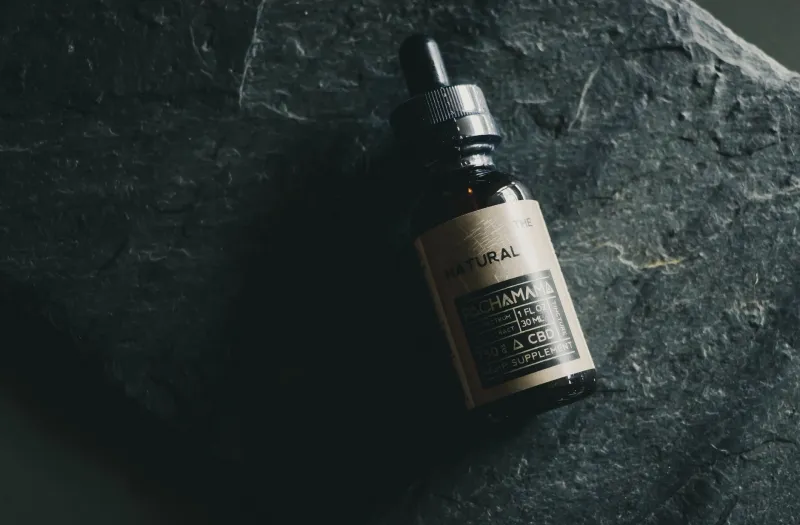
Yes, You Should Tell Your Doctor You're Taking CBD — Here's How to Have That Talk

Let's be honest. When the nurse hands you that intake form and asks what supplements you're taking, there's a decent chance you've left CBD off the list. Maybe you figured it wasn't a "real" medication. Maybe you weren't sure how your doctor would react. Or maybe you just didn't want to deal with the awkward pause that sometimes follows.
You're not alone. A surprising number of Americans who use hemp oil and CBD products never bring it up with their healthcare provider. But here's the thing — that silence can actually work against you. The medical world's understanding of CBD has shifted considerably over the last several years, and more doctors than ever are not only open to the conversation, they're genuinely interested in having it.
So let's talk about how to make that happen.
Why Doctors Want to Know in the First Place
Your doctor's job isn't to judge your wellness choices. It's to see the full picture of your health. When they don't know what you're taking — whether it's a prescription medication, an herbal supplement, or a daily CBD tincture — they're working with incomplete information. And incomplete information can lead to incomplete care.
CBD, short for cannabidiol, is a bioactive compound. That means it does something in the body. It interacts with the endocannabinoid system, influences certain enzyme pathways, and in some cases can affect how other substances are metabolized. That's not a reason to avoid it — it's a reason to be upfront about it.
The good news? Most physicians aren't going to lecture you. The stigma that once surrounded anything hemp-related has softened considerably, especially after the 2018 Farm Bill made hemp-derived CBD federally legal. Many doctors have patients who use it, and plenty have done their own reading on the subject.
The Drug Interaction Issue Is Real — and Manageable
One of the most practical reasons to loop in your healthcare provider is the question of drug interactions. CBD is processed in the liver by a group of enzymes called cytochrome P450, specifically CYP3A4 and CYP2C19. These same enzymes metabolize a wide range of common medications — including certain blood thinners, antidepressants, anti-seizure drugs, and cholesterol medications.
When CBD is present, it can either slow down or speed up how those medications are broken down. That can mean a drug stays in your system longer than expected, or gets cleared out faster. Neither scenario is ideal without your doctor knowing about it.
This doesn't mean CBD is dangerous alongside other medications. It means the interaction is worth tracking. Your doctor may want to monitor your levels more closely, adjust a dosage, or simply note it in your chart. That's responsible medicine — not a red flag.
If you're on a blood thinner like warfarin, or you take any medication where dosage precision really matters, this conversation isn't optional. It's genuinely important.
How to Actually Bring It Up
If the idea of mentioning CBD still feels a little nerve-wracking, here's a simple approach that works in most clinical settings.
Be matter-of-fact about it. You don't need to build up to it or over-explain. Something like, "I've been using a hemp-derived CBD oil daily — I wanted to make sure you knew in case it's relevant to anything we're discussing today" is clear, professional, and easy for your doctor to work with.
Come with specifics. The more information you can offer, the more useful the conversation becomes. What product are you using? Is it full-spectrum, broad-spectrum, or isolate? What's the dose? How often are you taking it, and how — sublingually, in a capsule, as a topical? Bringing the label or a screenshot of the product's certificate of analysis (COA) is genuinely helpful.
Ask direct questions. Don't leave the appointment without understanding whether your doctor sees any potential concerns given your current health picture. Ask specifically: "Is there anything in my current medication list that might interact with CBD?" and "Is there anything you'd want to monitor?"
Don't get thrown off by uncertainty. Some physicians — particularly older practitioners or those in more conservative specialties — may not have deep familiarity with hemp-derived CBD. If your doctor seems uncertain, that's okay. You can ask for a referral to an integrative medicine specialist, or simply request that it be noted in your chart. Not every doctor needs to be a CBD expert to flag a potential interaction.
What If Your Doctor Isn't Receptive?
It happens. Some physicians are still operating with outdated assumptions about hemp and cannabis. If you feel dismissed or unheard, that's worth paying attention to — not necessarily about CBD specifically, but about the broader dynamic of your care.
You have options. Integrative medicine doctors, naturopathic physicians, and functional medicine practitioners tend to be more fluent in the conversation around hemp oil and cannabinoids. Many are actively incorporating it into their recommendations. If you're in a larger metro area, these specialists are increasingly accessible. Telehealth platforms have also made it easier to connect with providers who take a more holistic approach.
The point isn't to find a doctor who will rubber-stamp everything you're doing. It's to find someone who will engage with your full health picture honestly.
Building a Wellness Strategy That Actually Works
CBD hemp oil works best as part of a broader approach to health — not as a secret side project running parallel to your medical care. When your doctor knows what you're doing, they can help you figure out whether it's contributing to your goals, whether the dose makes sense, and whether anything else in your routine might be working against you.
Think about it this way: you'd mention fish oil. You'd mention melatonin. You'd mention that you started a new exercise program. CBD deserves the same transparency, and increasingly, it gets the same response — a nod, a note in the chart, and a conversation about whether it fits your overall plan.
That's the shift happening right now in American healthcare. More patients are asking. More doctors are listening. And the more openly that conversation happens, the better the information gets for everyone.
So next time you're at your annual physical, or following up on a prescription, or just checking in with your provider — bring it up. It's a two-minute conversation that could genuinely matter.